How to Improve Credit Score in Texas: 10 Things Every Family Should Know

Let's talk about something that affects every Texas family but nobody really wants to discuss at the dinner table: your credit score. Whether you're trying to buy a home in Katy, lease a car in Sugar Land, or just get better insurance rates, that three-digit number matters more than most folks realize.
Here's the thing: improving your credit score doesn't require a finance degree or some secret formula. But it does require knowing what actually moves the needle. After working with hundreds of Texas families, I've seen the same mistakes repeated over and over: and the same strategies that consistently work.
So let's cut through the noise and talk about the 10 things every Texas family should know about improving their credit score.
1. Know Your Starting Point (And Check It Regularly)
You can't improve what you don't measure. Before you do anything else, you need to know where you stand today.
The good news? Checking your credit score is easier than ever. You can access your score through free apps like Credit Karma, or request your full credit report from annualcreditreport.com once per year from each bureau.
But here's what most people don't know: you should be checking your score at least monthly, not just once a year. Credit scores change constantly as new information gets reported. Regular monitoring helps you catch identity theft early, spot reporting errors before they cause damage, and track your progress as you make improvements.
The Bottom Line: Set a calendar reminder for the first of every month to check your score. Make it as routine as paying your electric bill.

2. All Three Credit Bureaus Matter
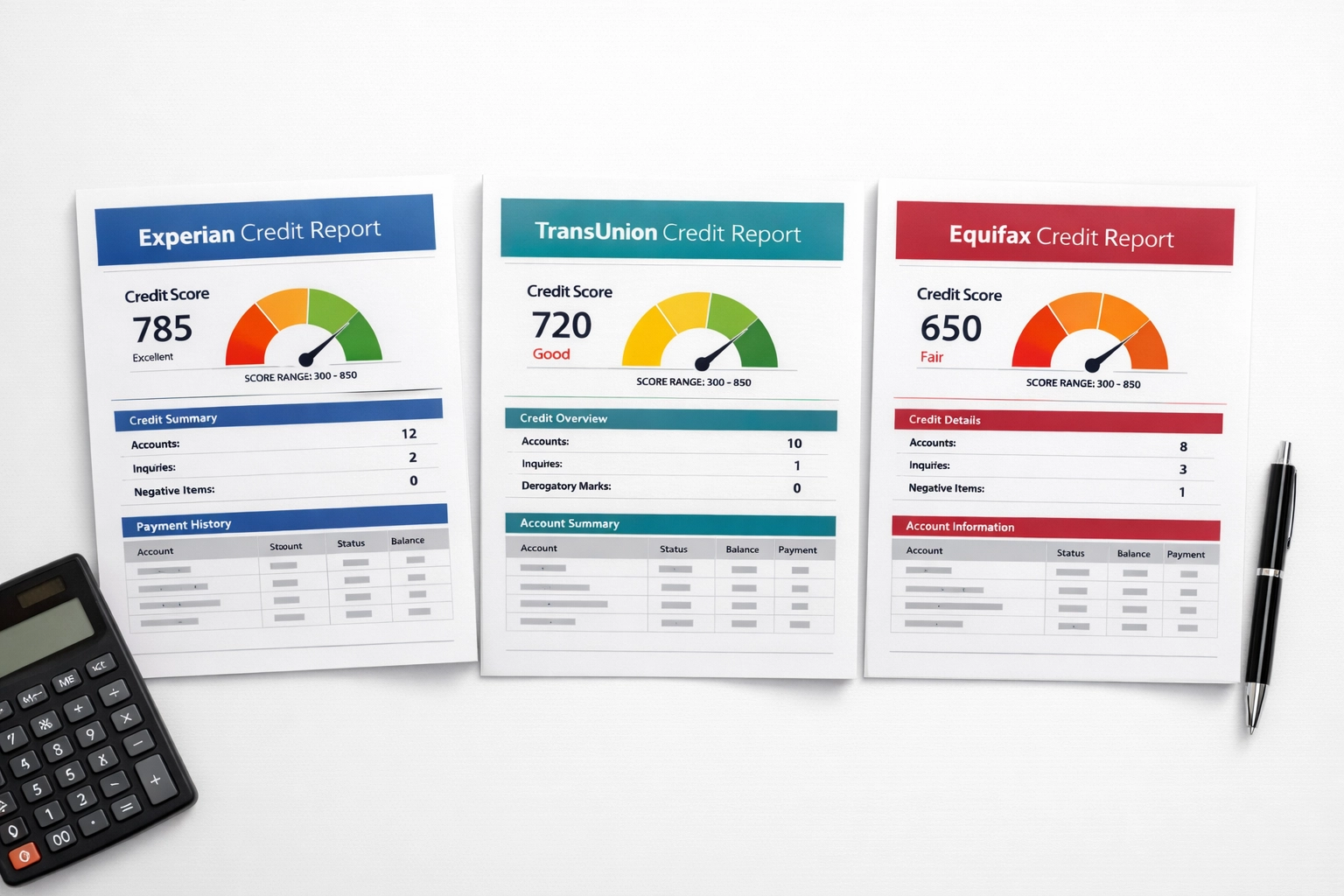
Here's something that trips up a lot of folks: you don't have just one credit score. You actually have three: one from Equifax, one from Experian, and one from TransUnion.
Why does this matter? Because lenders pull from different bureaus, and each bureau might have slightly different information about you. A mortgage lender might pull all three and use the middle score. An auto lender might only check one. If you're only monitoring one bureau and ignoring the others, you could be blindsided when you apply for credit.
The reality is that while your scores across the three bureaus will usually be similar, discrepancies happen. An account might be reported to two bureaus but not the third. An error on one report might not appear on the others.
3. Verify Everything on Your Reports
This one's critical: get your full credit reports from all three bureaus and read them line by line. Look for accounts you don't recognize, incorrect payment histories, debts that aren't yours, or accounts that should've been removed years ago.
According to consumer advocacy groups, roughly 20% of credit reports contain errors. That's one in five people walking around with inaccurate information dragging down their scores.
If you spot an error, you have the right to dispute it. The bureau has 30 days to investigate and either verify the information or remove it. For complex disputes: especially those involving collections, charge-offs, or identity theft: having professional help can make a significant difference in outcomes.
4. Understand What Actually Affects Your Score
Not all credit behaviors are created equal. Your credit score breaks down roughly like this:
- Payment history: 35-40% (the biggest factor)
- Credit utilization: 30% (how much credit you're using vs. your limits)
- Length of credit history: 15% (how long you've had credit)
- Credit mix: 10% (different types of accounts)
- New credit inquiries: 10% (recent applications)
Additionally, derogatory marks like bankruptcies, foreclosures, and collections can tank your score significantly.
Understanding this breakdown helps you prioritize. If you're focusing all your energy on getting a new credit card for mix purposes but you're missing payments, you're working on the 10% while ignoring the 35%. Not a winning strategy.
5. Payment History Is King
Since payment history accounts for 35-40% of your score, this is where you need to focus first. One payment that's more than 30 days late will stay on your credit report for seven years. Seven years.
The strategy here is simple but non-negotiable: pay everything on time, every time. Set up automatic payments for at least the minimum due, scheduled a day or two after your payday. This removes the human error factor.
If you've already got late payments on your record, you can't erase them (despite what some shady companies promise). But you can minimize their impact by building a perfect payment history moving forward. As those late payments age, their impact diminishes, especially when surrounded by years of on-time payments.
6. Credit Utilization: The Quick Win
Want to see your score jump relatively fast? Pay down your credit card balances.
Credit utilization is the ratio of your credit card balances to your credit limits. If you have a $10,000 limit and a $5,000 balance, you're at 50% utilization.
Here's the benchmark: for a good credit score, keep utilization below 50%. For an excellent score, aim for 10-30%. The lower, the better.
Strategy: If you've got multiple cards with balances, pay off the highest-interest card first while making minimum payments on the others. This saves you money on interest while steadily improving your utilization ratio. Some folks prefer the "snowball method" (paying off smallest balances first for psychological wins), but mathematically, highest-interest-first wins.
7. Get Current on Past-Due Accounts
If you're behind on bills right now, this is your priority before anything else. An account that's 30 days late is bad. One that's 60 or 90 days late is worse. And once something hits 180 days past due, it typically gets sent to collections: which is credit score poison.
The move: contact the creditor directly and work out a payment plan. Most companies would rather get paid late than not get paid at all, so they're often willing to work with you. Once you're caught up, set up automatic payments so you never fall behind again.
Don't ignore past-due accounts hoping they'll go away. They won't. They'll only get worse.

8. Be Strategic About Credit Inquiries
Every time you apply for credit, it generates a "hard inquiry" on your report. Too many inquiries in a short period signal to lenders that you might be desperate for credit or taking on too much debt.
Here's what you need to know: when you're shopping for a mortgage or auto loan, multiple inquiries within a 30-45 day window typically count as just one inquiry. The credit scoring models understand you're rate shopping, not applying for 10 different loans.
But opening multiple credit cards? That's different. Each application counts separately and can ding your score. Plus, it lowers your average account age, which also affects your score.
The rule: only apply for credit you actually need, and space out applications by at least six months when possible.
9. The Credit Limit Increase Strategy
Here's a less-known tactic: if you've had a credit card for a few years, maintained good payment history, and your income has increased, request a credit limit increase.
Why? Because if your spending stays the same but your available credit increases, your utilization ratio automatically improves. If you have a $5,000 limit and a $2,000 balance (40% utilization), and your limit increases to $10,000, you're suddenly at 20% utilization: without paying down a penny.
The catch: some credit card companies do a hard inquiry when you request an increase, which can temporarily ding your score. Ask the company first whether they'll use a hard or soft inquiry. If it's hard, you'll need to weigh whether the utilization benefit outweighs the inquiry impact.
10. Know When to Get Professional Help
Let's be real: everything I've covered on this page is accurate and useful. If you've got a relatively clean credit report and just need to optimize your payment habits and utilization, you can probably DIY your way to a better score.
But here's what this page didn't cover: disputing complex inaccuracies, negotiating with collection agencies, understanding the nuances of Texas-specific credit laws, strategizing around recent bankruptcies or foreclosures, or building credit from absolute scratch.
"I've worked with hundreds of Texas families, and the ones who make the fastest progress are the ones who get educated first but then bring in professional support for the complicated stuff. Knowledge is power, but experience is the shortcut."
: William Avery, Texas Credit Trail
A legitimate credit repair specialist (and yes, we exist: Texas Credit Trail is licensed and BBB accredited) can often accomplish in 3-6 months what takes the average person 2-3 years on their own. Not because of magic, but because of experience knowing what works, what doesn't, and how to navigate the system efficiently.
If your credit issues are straightforward: you just need to pay down balances and establish good habits: the information on this page will serve you well. If your situation involves collections, judgments, identity theft, or complicated disputes, professional help typically pays for itself many times over.

The Bottom Line for Texas Families
Improving your credit score isn't rocket science, but it does require consistency, patience, and knowledge of how the system actually works. The 10 strategies we've covered here form the foundation of any successful credit improvement plan.
Here's your action plan:
- Check your credit reports from all three bureaus this week
- Set up automatic payments for all recurring bills
- Create a plan to pay down your highest-interest debt first
- Check your score monthly to track progress
Most Texas families see meaningful improvement within 3-6 months when they consistently apply these principles. Not overnight, but faster than most people expect.
If you're ready to dive deeper into credit improvement strategies specifically designed for Texas families, check out our free credit education resources. And if your situation is more complex than simple optimization, we're here to help.
Your credit score isn't permanent. It's just a snapshot of your current financial behavior: and behavior can change. Start with one or two strategies from this list, build momentum, and keep moving forward. That's how Texas families win the credit game.
Ready to Start Your Credit Journey?
Get personalized credit repair guidance from William Avery
Book Free Consultation