How to Fix Credit After Late Payments: The Texas Family's Step-by-Step Guide

You opened your credit monitoring app and saw it: your score dropped 80 points because of one late payment. Maybe it was a busy month, maybe the autopay didn't go through, or maybe money was just tight. Whatever the reason, you're here now wondering how to fix this mess.
Here's the good news: late payments aren't permanent credit killers. Whether you just missed your first payment or you're dealing with multiple late marks, there's a clear path forward. Let me walk you through exactly how Texas families are rebuilding their credit after late payments: and what separates the folks who recover in months from those who struggle for years.
Act Fast: The Critical 30-Day Window
If you've missed a payment but it's been less than 30 days, you're still in the safe zone. Most creditors don't report late payments to the credit bureaus until they hit that 30-day mark. Here's what to do right now:
Call your creditor immediately. Don't wait for a letter or email. Get someone on the phone, explain the situation, and make a payment as soon as possible: even if it's just the minimum. Many card companies will waive the late fee if you ask, especially if you've been a good customer.
Get confirmation in writing. Once you've paid, ask the representative to confirm they won't report the late payment to the bureaus. Save that email or screenshot the chat.
If you're already past 30 days, don't panic. You've got options, but the strategy changes.

Step 1: See the Full Picture
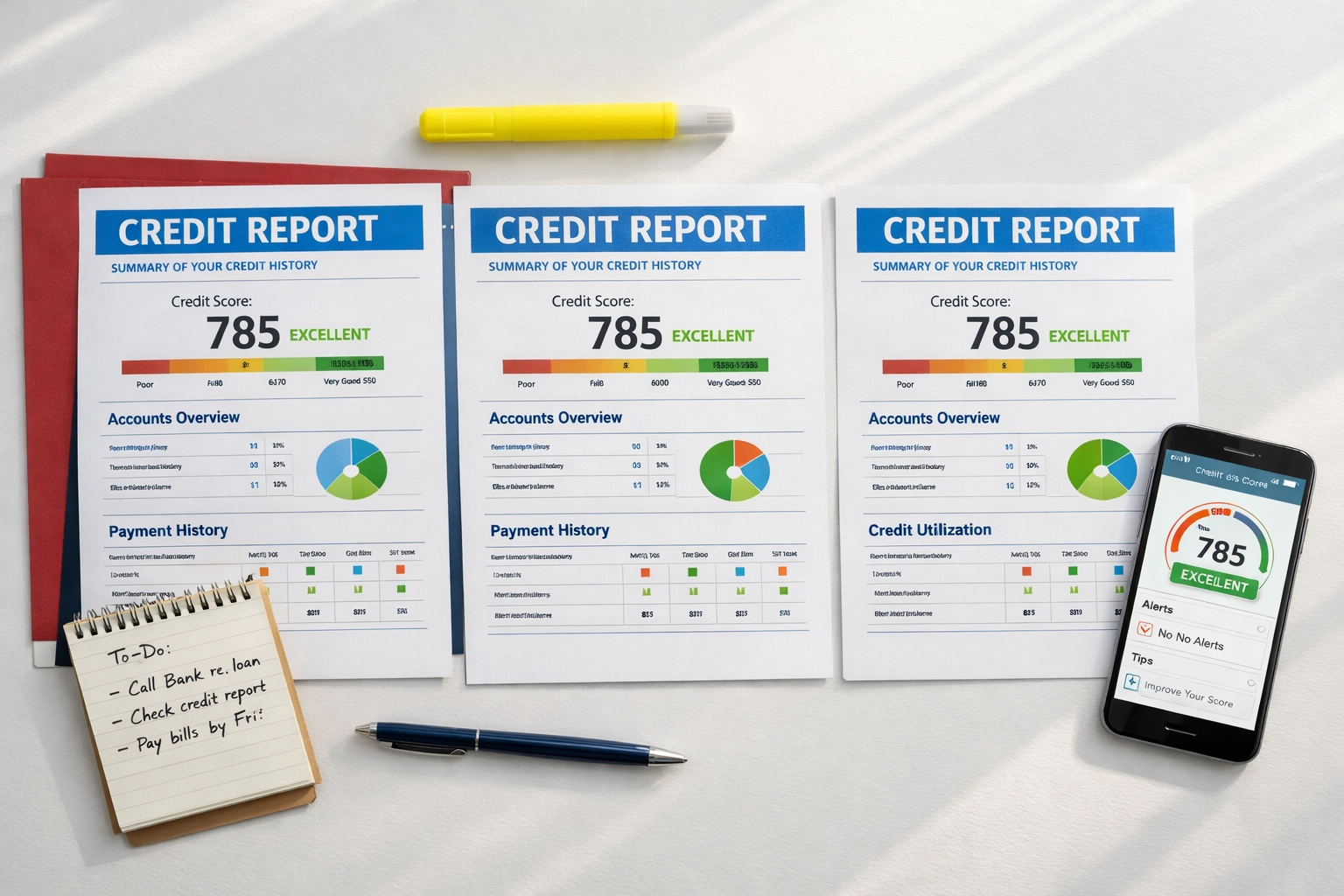
Before you can fix your credit, you need to know exactly what you're dealing with. Pull your credit reports from all three bureaus: Equifax, Experian, and TransUnion: at AnnualCreditReport.com (it's free once a year).
Look for these details on each late payment:
- Which accounts show late payments
- How late were you? (30 days, 60 days, 90+ days)
- When did it happen?
- Is the information consistent across all three bureaus?
Sometimes you'll find that one bureau shows a late payment while the others don't. Or the dates might be wrong. These discrepancies matter because they're your first opportunity to clean things up.
Step 2: Dispute What's Actually Wrong
Here's where most people get tripped up. If a late payment on your report is inaccurate: meaning you actually paid on time, or the dates are wrong: you have the legal right to dispute it.
Gather your proof first:
- Bank statements showing the payment cleared on time
- Confirmation emails or screenshots from your creditor's website
- Any communication with the company
Then contact the creditor directly. Be polite but firm. Explain exactly what's incorrect and send your documentation. If they agree it's wrong, they're legally required to notify the credit bureaus and have it corrected or removed.
If the creditor won't budge, file a dispute with each credit bureau that's reporting the error. You can do this online through their websites. The bureaus have 30 days to investigate and respond.
Reality check: Disputing accurate information won't work. The bureaus will verify it with the creditor and it'll stay on your report. But if there's a genuine error? Getting it removed can bring your score back up fast.
Want more detail on this process? Check out our complete guide on how long late payments stay on your credit report and removal strategies.
Step 3: The Goodwill Letter Strategy
What if the late payment is accurate? You were actually late, the dates are correct, and there's no disputing the facts. You still have one card to play: the goodwill letter.
A goodwill letter is exactly what it sounds like: you're asking your creditor to forgive the late payment and stop reporting it to the bureaus as an act of goodwill. It doesn't always work, but when it does, it can wipe a negative mark off your report entirely.
Here's how to write one that has a chance:
Keep it short. One page maximum. Creditors are busy.
Acknowledge the late payment. Don't make excuses, but briefly explain what happened (medical emergency, job loss, family crisis).
Highlight your history. If you've been a customer for years and this is your first slip-up, say that. Numbers help: "I've made 47 consecutive on-time payments before this."
Confirm you're current. Make sure the account is caught up before you send the letter.
Ask politely. "I'm respectfully requesting that you consider removing this late payment as a courtesy adjustment."
Send it to the creditor's customer service department. Some will do it, especially for long-time customers. Others won't. But it costs you nothing but a stamp or an email.
DIY vs. Professional Help: The Honest Comparison
Let's talk about what you can realistically do yourself versus when it makes sense to bring in professionals.
What you can do on your own:
- Pull your credit reports and spot obvious errors
- Dispute inaccurate information with bureaus
- Write and send goodwill letters
- Set up payment reminders and autopay
- Start building positive payment history
What gets harder without help:
- Knowing which disputes are worth filing and how to word them for maximum impact
- Navigating complex situations (multiple late payments, mixed with collections or charge-offs)
- Understanding creditor-specific policies and who to escalate to
- Tracking and following up on disputes across three bureaus
- Strategizing the fastest path to your specific credit goals
Here's what most Texas families don't realize: credit repair isn't just about knowing the steps: it's about executing them efficiently and knowing when to push harder. A professional service like Texas Credit Trail has relationships with creditors, knows bureau-specific quirks, and handles the paperwork while you focus on your family.
The time factor: DIY credit repair typically takes 12-24 months to see significant results. With professional help, many clients see improvements in 3-6 months. When you're trying to buy a house, refinance a car loan, or qualify for better insurance rates, those months matter.

Step 4: Build Positive Payment History (This Is Non-Negotiable)
Whether you go DIY or get professional help, one thing stays the same: you need to establish a rock-solid pattern of on-time payments going forward. Late payments stay on your report for up to seven years, but their impact fades significantly after 12-24 months: if you're showing consistent responsible behavior.
Set yourself up for success:
Automate everything. Set up automatic payments for at least the minimum amount on every account. Even if you plan to pay more later in the month, that autopay is your insurance policy.
Use calendar alerts. Set reminders 3-5 days before each due date. This gives you time to catch any autopay glitches.
Keep balances manageable. High credit card balances make it harder to keep up with payments. Aim to keep your utilization under 30% of your credit limit.
Check in monthly. Review your credit reports every few months to make sure your on-time payments are being reported correctly.
If you're starting from scratch or rebuilding, our guide on how to build credit from scratch has specific strategies for establishing that positive history quickly.
When One Late Payment Becomes Multiple Problems
Here's the hard truth: if you're dealing with more than one or two late payments: or if those late payments have snowballed into collections, charge-offs, or repossessions: the DIY path gets exponentially harder.
Each late payment requires its own dispute strategy. Different creditors have different policies. Some will negotiate, others won't. And navigating three different credit bureaus, each with their own dispute processes and timelines, turns into a part-time job.
This is where Texas families often hit a wall. You know what needs to be done, but finding the time and energy to do it while working, raising kids, and managing everything else? It's overwhelming.

The Reality of Credit Score Recovery
Let's set realistic expectations. A single 30-day late payment might drop your score 60-110 points initially, depending on where you started. But here's the timeline most people see:
Months 1-3: Implement damage control. Get current on all accounts, start building positive payment history, dispute any errors.
Months 4-6: Begin seeing modest improvements as you stack on-time payments. If you got errors removed, you might see a bigger jump.
Months 7-12: The late payment's impact starts fading. Your score climbs as positive history outweighs the negative.
12-24 months: If you've been consistent, the late payment becomes a minor factor. Your score can fully recover or even exceed where you were before.
That's the general path. But every situation is different. Someone with a thick credit file and years of history will recover faster than someone with only two credit cards and a thin file.
Your Next Move
You've got the roadmap. The question is whether you're going to tackle this alone or get help navigating the trail.
If you're dealing with one or two late payments, your credit history is otherwise solid, and you've got the time to manage the dispute process, DIY might work just fine.
But if any of this sounds like you:
- Multiple late payments across different accounts
- Late payments mixed with collections or other negative marks
- You're trying to qualify for a mortgage or car loan in the next 6-12 months
- You've tried disputing on your own without results
- You don't have 10+ hours per month to dedicate to credit repair
Then it's time to talk to the professionals at Texas Credit Trail. We handle the paperwork, the follow-ups, and the creditor negotiations while you focus on keeping your finances stable and building toward your goals.
We're Texas-based, we understand the challenges Texas families face, and we've helped hundreds of folks turn their credit around faster than they thought possible. Start your free credit analysis today and let's map out the fastest path to the score you need.
Your credit score isn't permanent. Late payments happen to good people. What matters is what you do next.
Ready to Start Your Credit Journey?
Get personalized credit repair guidance from William Avery
Book Free Consultation